A Lipstick Sample Scorecard Buyers Can Actually Use
A lipstick sample scorecard makes shade approval repeatable across people, light sources and production rounds. Judge colour on the lip and in the package, then score payoff, texture, skin feel and wear separately so one flattering swatch cannot hide a weak formula.
Key takeaways
- Approve colour against a physical reference under fixed lighting.
- Keep shade, texture and fragrance feedback in separate fields.
- Test the intended pack and application method during sample review.
- Record the accepted formula and sample code before production planning.
What makes a lipstick shade hard to approve?
The same bullet can appear warmer, cooler or darker under different lighting. Phone cameras add white balance and processing changes, while skin tone and application thickness alter the result. A swatch photographed once is not a controlled colour standard.
Set the reference before opening samples. Record the lighting, substrate, number of strokes and application pressure. Include the package view because a shade can look appealing on a card but wrong beside the intended component.
How should the first shade round be structured?
Use a small set of coded candidates around a defined direction: for example, three adjacent warm-neutral shades rather than ten unrelated colours. The brand should state which attribute is under review—undertone, depth, opacity or payoff.
Ask panelists to compare each sample with the same approved swatch and record the difference before giving a preference. A useful note says 'candidate C is one step deeper and less orange' rather than 'C looks more expensive.'
What does a scorecard need?
Separate colour match, payoff, glide, coverage, texture, skin feel, fragrance and packaging. Score each from 1 to 5 and give colour match the largest weight when shade is the decision. A separate 'must pass' field captures breakage, sweating, cap fit or unexpected drag.
Yunmei describes fine-tuning fragrance, texture, skin feel and efficacy during sample preparation. Keep those dimensions distinct so changing fragrance does not accidentally become a shade approval.
Yunmei's lipstick page sets out its product-development context for private label lipstick manufacturers; use the published details to anchor the buyer brief, not as a substitute for product-specific testing.
| Attribute | Weight | Record |
|---|---|---|
| Shade match | 30 | Reference and light |
| Payoff/coverage | 20 | Stroke count |
| Glide/texture | 15 | Application notes |
| Skin feel/wear | 15 | Timed review |
| Packaging function | 15 | Twist and cap test |
| Fragrance | 5 | Preference |
Which lighting and substrates should be used?
Use a standardised neutral source and one realistic retail or daylight condition. Compare on a consistent drawdown card and on the intended wearer group when the brief requires it. Do not mix a thick arm swatch with a single lip coat and treat them as comparable.
Photographs are useful for tracking, but retain the physical master. Label each image with sample, date and light source. Avoid automatic camera filters that change the very colour the team is trying to approve.
How can wear tests avoid overclaiming?
Define observation times and normal use conditions. Record transfer, fading, comfort and reapplication needs as observations. A small internal test can guide development; it should not be turned into a broad performance promise without suitable substantiation.
Include hydration and fragrance preferences carefully. A product's after-feel is subjective, so report the distribution of responses rather than presenting one tester's view as a universal outcome.
What should packaging sign-off include?
Check bullet rise and return, twist mechanism, cap retention, component colour, label or decoration and shipping protection. Repeatedly extend and retract the product. A formula sample in a laboratory vial cannot validate the finished lipstick mechanism.
Use a production-intent component before final approval. Yunmei's stated process includes formulation determination and sample preparation; the brand should connect the accepted sample to the actual component code and artwork file.
How does sign-off move into a launch calendar?
Freeze shade standard, formula revision, component and test plan in one approval record. Yunmei publishes four to eight weeks for ODM using an existing formula and three to six months for OEM development; confirm which route, packaging and testing apply to the project.
A late shade change can affect pigment sourcing, sampling and artwork. Make the final approver and cutoff date explicit so a preference discovered after production booking does not silently reset the entire schedule.
Worked example: shade decision across three rounds
Suppose round one narrows eight concepts to three, round two selects one direction, and round three confirms a production-intent component. The funnel is 8 → 3 → 1, or a reduction of 62.5% after the first review (5 rejected of 8). Each round answers a different question, so the team avoids changing shade and package at once.
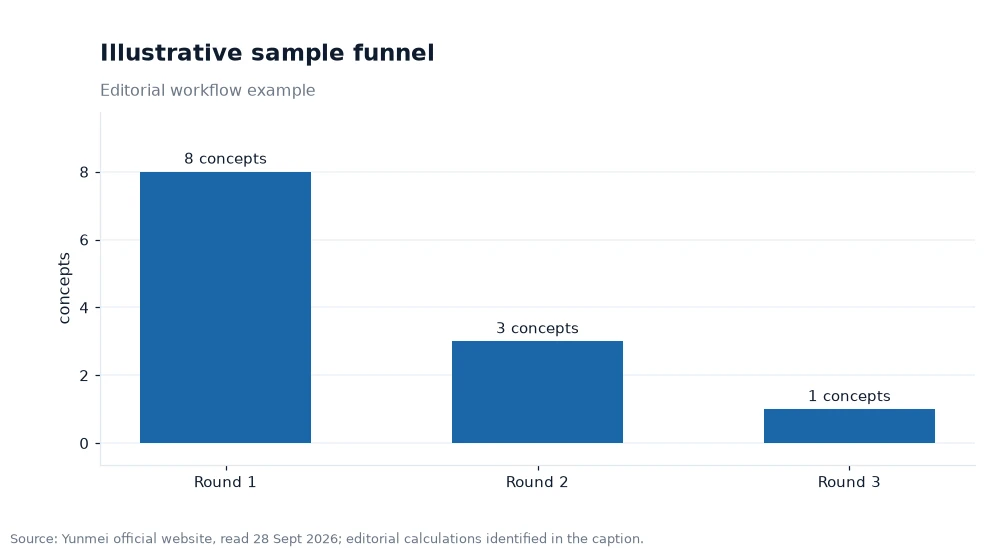
The count is a process example, not a supplier statistic. It shows how structured gates control sample workload while preserving a traceable reason for each decision.
Frequently asked questions
Should shade approval rely on photographs?
Use photos as records, not as the final colour master. Keep a physical reference and note the light source, application method and sample code.
Can fragrance be changed after shade approval?
It can be reviewed as a separate change, but record a new formula version and confirm that the adjustment does not affect other approved attributes.
Who signs the production shade?
Name one authorised brand approver and link the signed physical standard to the formula, component and artwork versions.
Approve a standard the factory can reproduce
A clear shade master, separate score fields and a production-intent component turn subjective preference into a workable release decision. Keep the record with the sample, not only in a meeting recap. For editorial and retail readiness, establish a naming convention before the range grows. The shade name, internal code, master sample and carton artwork should point to the same item. Maintain a record of who changed the name and whether the change affects translation, barcode or product information files. Ask the approver to initial both the physical swatch and the digital record. If the shade is revised after artwork preparation, pause the release until the files and samples agree. This small control avoids mismatched swatches at a photo shoot or a production team using an outdated target. The sample score sheet should travel with the final approval rather than remain in a personal inbox. Before the project is closed, compare the approved record with the exact item being purchased. Check the version, quantity, component and evidence reference rather than relying on a remembered conversation. Ask the supplier to confirm any open assumption in writing, and save that confirmation with the quotation. If an answer changes the brief, update the sample and calendar before releasing the next commitment. This final reconciliation gives the brand a clear basis for later questions from production, quality or customer service. It also makes the next order easier to plan because the team can distinguish what was learned from what was merely assumed during the first launch. Retail presentation can influence the first impression, but the internal approval record should remain independent of styling. Evaluate shade with neutral surfaces first, then review how the component and display appear together. Keep photographs unedited for comparison and note any unavoidable differences between studio and store lighting. If a shade is intended for a particular season or campaign, identify that role in the product plan rather than using a short-lived visual trend as the only reason to manufacture it. The brand should also decide how to handle a component change when the original packaging is unavailable. Maintaining the shade master and formula reference allows a replacement to be assessed without confusing packaging variance with a colour change. Review Yunmei’s OEM/ODM manufacturing overview and use the same written brief for every sample round.
Yunmei lipstick process details and published timing ranges were reviewed on 28 Sept 2026. The shade-funnel example is an editorial workflow, not company data.[1].